
Original upload date: May 25 2014
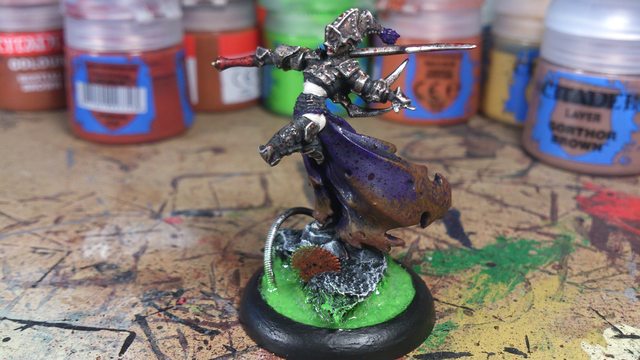
The Warwitch Siren was super quick and fun to finish.

Thanks for reading, likes/shares/comments are appreciated!

The Warwitch Siren was super quick and fun to finish.
Thanks for reading, likes/shares/comments are appreciated!

Here are my Nightwretches. One of them has fallen in the goop!

To make the drips of goo I dried some water effects in long strips and glued them onto the model with a little PVA. Then I covered them with a layer of fresh water effects gel.

Thanks for reading, likes/shares/comments are appreciated!

I experimented with another one of GW’s Technical Paints on my Afflictor. Nurgle’s Rot is weird, it’s semi-clear and rubbery. I built up successive layers to simulate a drop oozing out of the stinger. Eww.
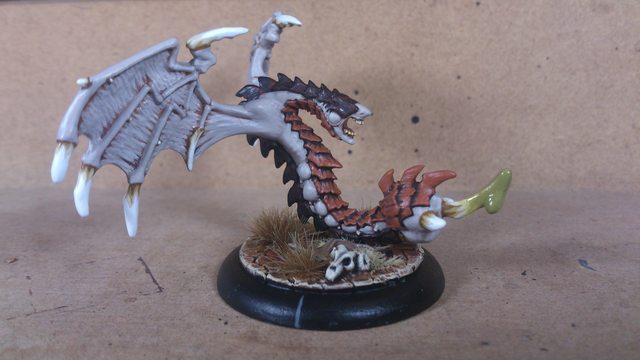
Unfortunately, a few days later I pulled it out of my foam case and was confronted with this:
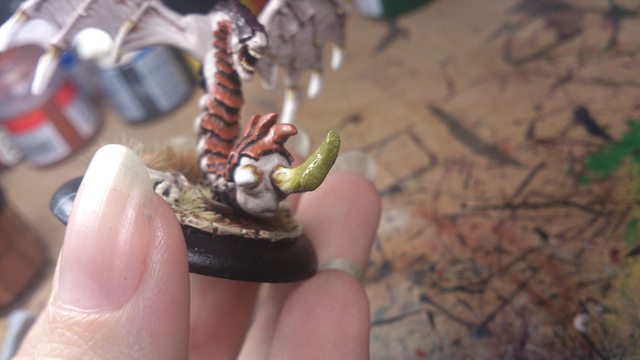
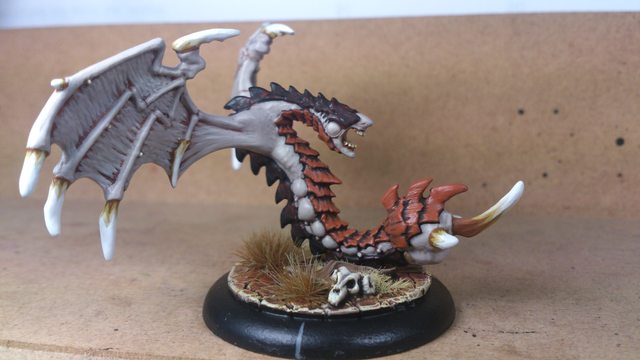
The drip was so rubbery that it absorbed the texture from my foam and got squished. I had to get rid of it. So here’s my revised Afflictor minus the drip. I still think it was a cool idea, but sometimes experiments just don’t work out.
Thanks for reading, likes/shares/comments are appreciated!

I experimented with the green goop on the Slayer’s base, making a little waterfall coming out of the tube.
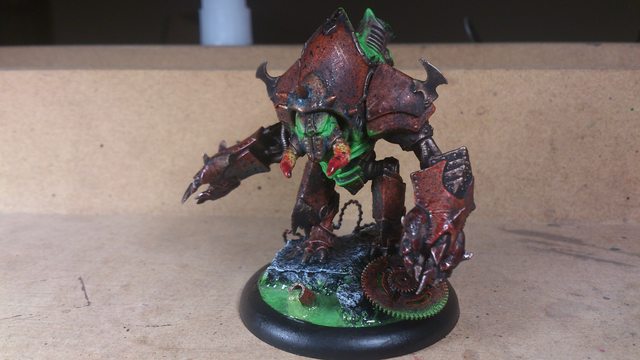
Thanks for reading, likes/shares/comments are appreciated!

I’ve felt like painting something different so I whipped up this quick studio-inspired Druid Gone Wilder.
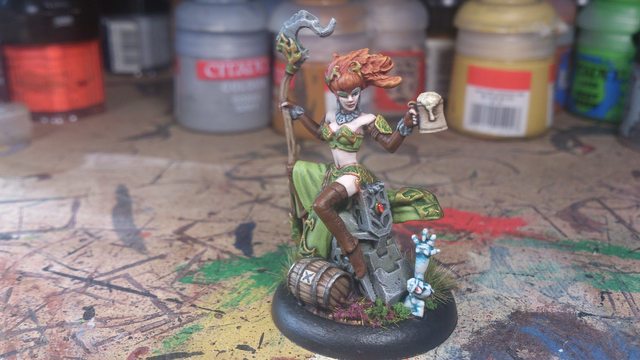
Thanks for reading, likes/shares/comments are appreciated!

I finished a second Deathripper and a Defiler.

Thanks for reading, likes/shares/comments are appreciated!

I’ve finished Vayl2. I used her as a practise model during Meg Maples’ Masterclass painting workshop.
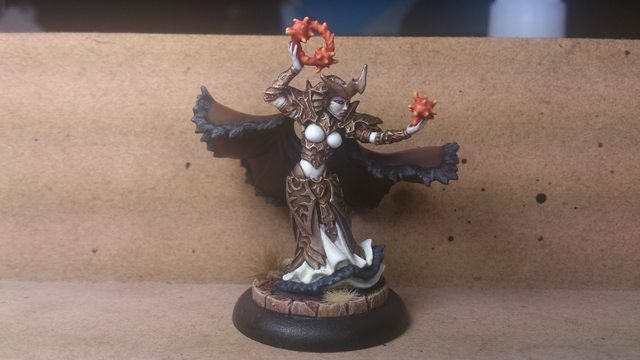
Meg showed us how she paints her amazing eyes. It’s quite a bit more involved than my usual minimalist approach, but basically goes:
Step 1: Black
Step 2: White leaving black outline
Step 3: Black circle in centre
Step 4: Bright colour in black circle
Step 5: Tiny black dot in top half of bright circle
Step 6: White reflection dot
It was incredible to watch her do this, and which such a large brush as well! My attempt misses out on the final step, but I’m pleased nonetheless. Here’s my attempt:
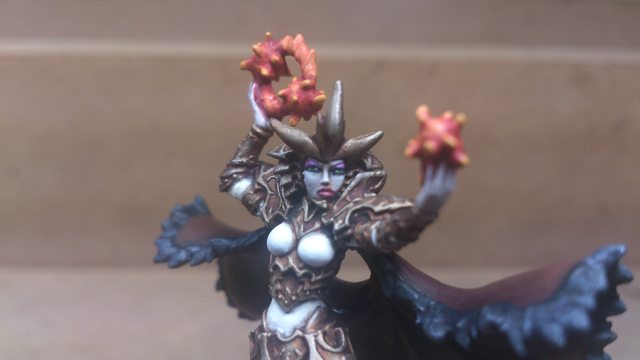
Later on I took some pics while experimenting with a $1 lens from ebay (like these here). It sticks onto a mobile phone and acts like a macro lens.

Her green eyes show up a little better when when taking pictures with it, but I couldn’t avoid that slight orange tint around the photo or manage to keep the lens cap out of the shot!

Thanks for reading, likes/shares/comments are appreciated!

Last weekend I spent 16 hours painting with the amazing Meg Maples (the artist formally known as PPS_Meg) at her Sydney Masterclass workshop. There were five members from the Siege the Hills club there (Represent!) and it was great to see all the different painters. This was actually the first time I’ve ever been taught how to paint something. Everything I know is self-taught from experimenting or searching on the internet, so I found it very strange to have a demo in front of me. I’m inspired to try out a few new things, for example I think the two-brush blending technique will really speed up my cloth highlights. Also Meg has an amazing technique for eyes which I have attempted on eVayl. Meg says I do faces really well (an amazing compliment from a painter with her skill).
Here’s the test model we did. Its one of Sebastian Archer’s Guild of Harmony sculpts. Those eyes were ridiculous! They are about half the size of PP eyes. New things I attempted were two-brush blending on the cloth, first attempt at that particular skin tone, and a quick osl effect.

Thanks for reading, likes/shares/comments are appreciated!

The Blackfrost Shard are incredibly detailed models with a lot of different textures. I matched their colours with Vayl to tie the wizards together visually.


Thanks for reading, likes/shares/comments are appreciated!

I chose this tentacle as the base anchor for the portal as it has a small flat section that fits onto the platform the best. I started by sawing off the end of the tentacle. It widens to socket into the beast’s body but I wanted to lengthen and change the angle to have it emerging from the pool above. I then hollowed out the top section so that I could have an increased surface area to attach the new top half of the tentacle. I drilled out a deep pin hole to support the upper tentacle and platform. This time I used a hollow brass rod to minimise weight.

I want to assemble the model in three sub-assemblies to make it easier to paint, and that means I need this tentacle connection to remain separate until the painting is done. I made a plug of putty as my starting point for the upper tentacle. I liberally applied vaseline to the socket so that the putty plug will be a perfect fit, but not stick.

I decided to wrap a tentacle around the platform for cool factor. I started by forming the basic shape out of aluminium foil. I use al foil as an armature as it is lighter and cheaper than putty, but it is not load-bearing so I needed to pin the claw through the putty into the platform.

I then sculpted putty over the top of the foil, joining it up with the original claw.

I realised at this point how long this conversion was going to take me. I could only sculpt a couple of scales at a time (or risk smudging) and I had about a hundred to go! Ugh.

I started to thicken up the support tentacle and add scales. It was important to match up the thickness so that it blends together when it’s all joined up to the portal, but for now I wanted to keep the pieces separate so that I could paint underneath the portal more easily. It’s taking a long time because I keep messing it up the thickness and the scales.

The two side tentacles are done. I had to saw off the ends as they thickened to fit into the Throne’s sockets. I want to make it look like the body of the beast is much higher on the other side of the portal, so the thickness of the tentacles needed to be more uniform. For that reason I filled in some of the musculature at the top of the tentacle as well. Some of the tentacles had a flattened section to rest on the base, because mine will be in mid-air I needed to fill out those flattened sections.

Here’s the top half of the wrapping tentacle. I learned a lot from my mistakes with the first one so I got the shape completely done before I started the scales.
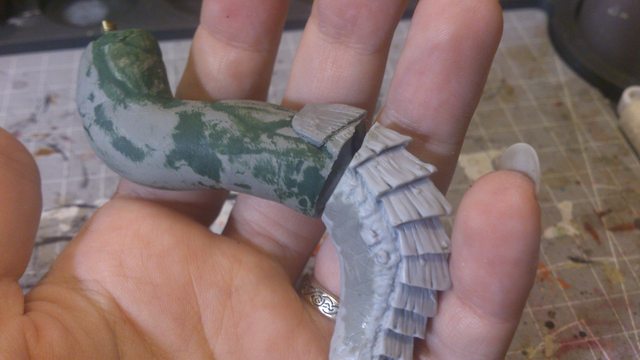
As opposed to this one, which I was very unhappy with. I lost count now of how many times I sliced greenstuff off and started again. It’s vertical so that it can support the weight of the structure but it just doesn’t look right.

So, after stripping it and resculpting several times I decided to start over and curled the putty around the brass rod. I think it’s an improvement but I wasted several months of sculpting those damn scales! That’s the new one on the left.

Here it is connected to the resin tentacle.
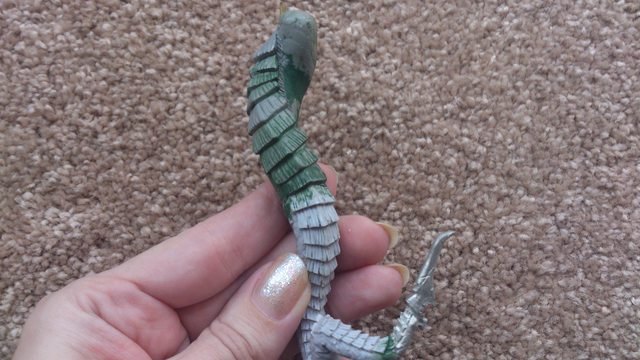
This conversion has taken me a very long time. I experienced delays when my putty never arrived. I tried a different putty and it turnout so badly that I had to rip it all off and start again. I also had to start the first tentacle from scratch. All together it took the fun out of the project and so I was dragging my heels on the conversion. (Don’t worry, it’s finally finished now!)
Thanks for reading, likes/shares/comments are appreciated!

 Aella13 Miniatures Painting